
Behind the scenes
Step behind the scenes of Family Affair and discover the people, places and moments that helped bring the beloved series to life. From the bustling studio lot to the sets where the cast and crew worked together week after week, Family Affair was shaped by a remarkable group of actors, writers, directors and production professionals. Behind every episode were countless stories, friendships and memorable moments that happened when the cameras weren’t rolling. As we celebrate the 60th anniversary of Family Affair, we’ll be opening the doors to the past with rare photographs, personal memories and stories from behind the scenes — offering a glimpse of what it was like to create one of television’s most enduring family classics. Check back as we continue to add more memories from behind the scenes.
Click on the Polaroid to discover behind the scenes anecdotes and treasured memories.


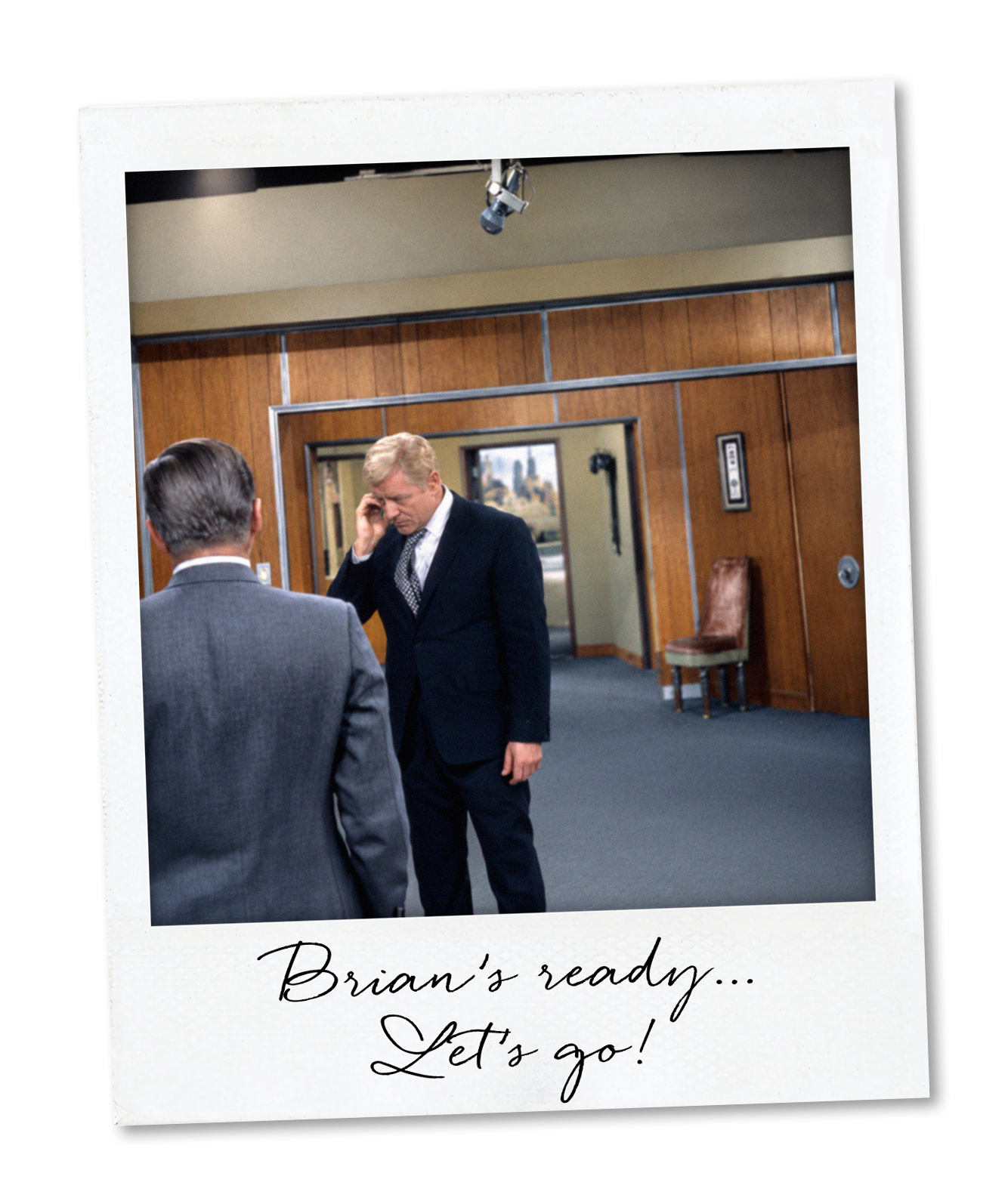
Brian’s ready. Let’s go!
When we had Brian, we were always working hardest. This deserves an explanation of the way we filmed our shows. It was known as the “MacMurray Method” or the “Fedderson Method,” a format developed by Don Fedderson to accommodate Fred MacMurray’s schedule on My Three Sons and later used with Brian Keith.
Most television shows are either shot episode by episode over a week’s schedule, moving from scene to scene, or, as in the case of The Lucy Show and some others, filmed with three cameras in front of a live audience, much like putting on a play from beginning to end.
Our show was different. We filmed in a more chopped-up way to accommodate Brian’s schedule. At the time, Brian was a major motion picture star, and he agreed to the series because Fedderson could offer him a specialized shooting schedule that still left enough time for his feature film projects.
Brian was contracted to work approximately 90 days with us. Ed Hartmann, the producer, had to have all the scripts for the season ready early. Brian’s scenes were split out and scheduled together. We would use “his” 90 days to shoot those scenes, getting a master shot with Brian and the rest of us, followed by Brian’s close-ups. Then we would stop and move on to another “Brian” scene.
Sometimes a month or more later, after Brian had left, we would return to film our close-ups from the earlier scene. The editor would put everything together so it looked as though it had all been filmed at the same time. This could be difficult for us, particularly the kids, because we were often reading our lines to an assistant director or the script girl.
The script girl had one of the hardest jobs. She had to make sure that a set, often a “hot set,” was restored exactly as it had been for the original Brian shots and that our costumes matched perfectly. She kept detailed Polaroid reference photos so that everything remained consistent. We couldn’t appear in one costume in the master shot and suddenly be wearing a different blouse or dress in the close-up. The magic of television – and some very good editors!
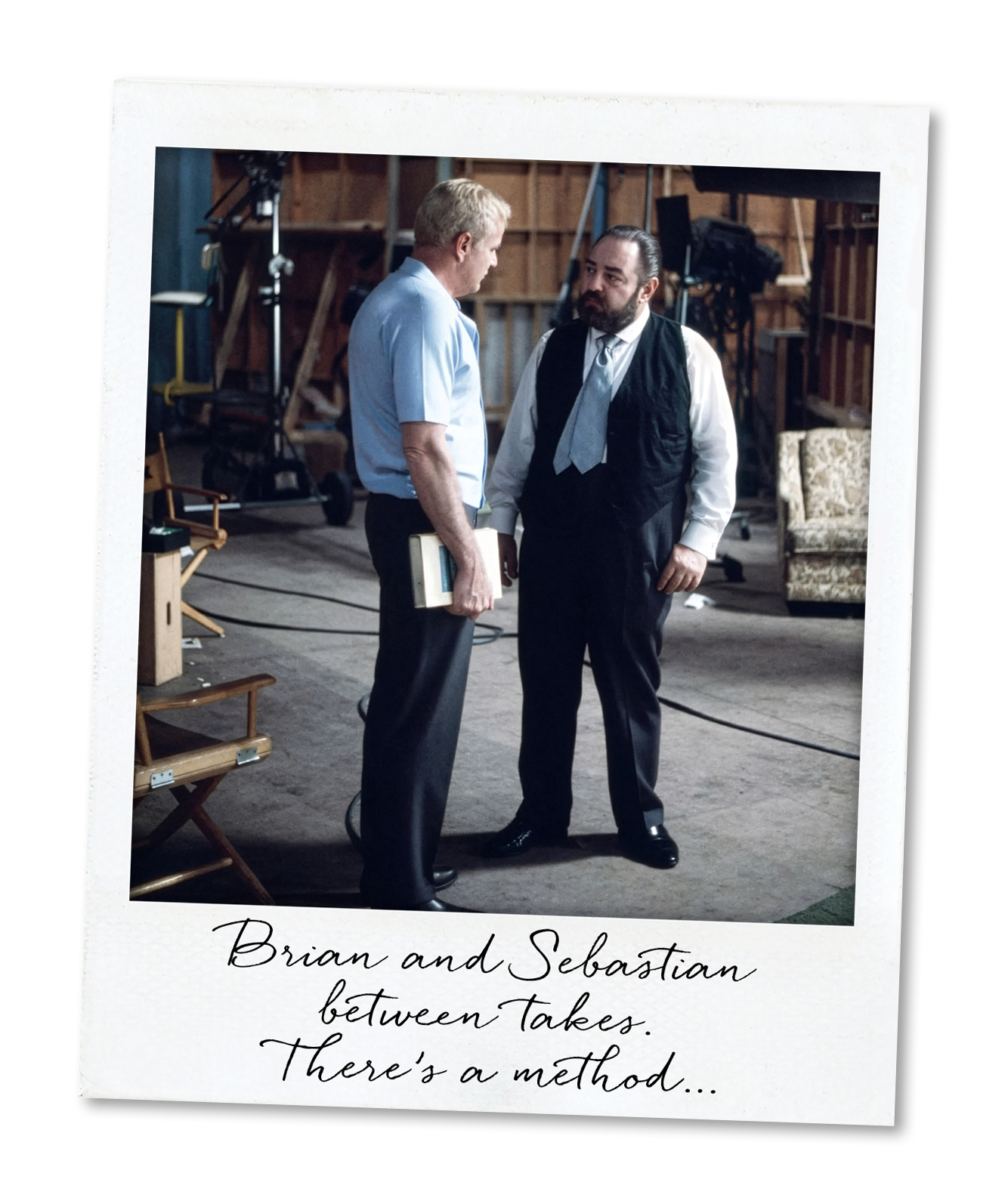
Brian and Sebastian between takes. There’s a method.
This is a wonderful behind-the-scenes shot of Brian and Sebastian. They performed so well together and were quite good friends off camera.
Brian and Sebastian had very different acting styles. Sebastian’s original training had been on the stage. Brian came from a show-business family and was used to a looser style of acting, probably from his experience in many Westerns.
Sebastian would study his script the night before filming, with his lines memorized and an exact sense of his actions and movements even before speaking with the director. Brian was the opposite. He would come in for hair and make-up, read through the script a couple of times in the make-up chair, and be ready to go. As you can imagine, Brian came up with a lot of ad-libs that stayed in the finished film.
These styles actually fit their characters well: “French” was more reserved and proper, while “Uncle Bill” was the casual, easygoing bachelor. It worked!
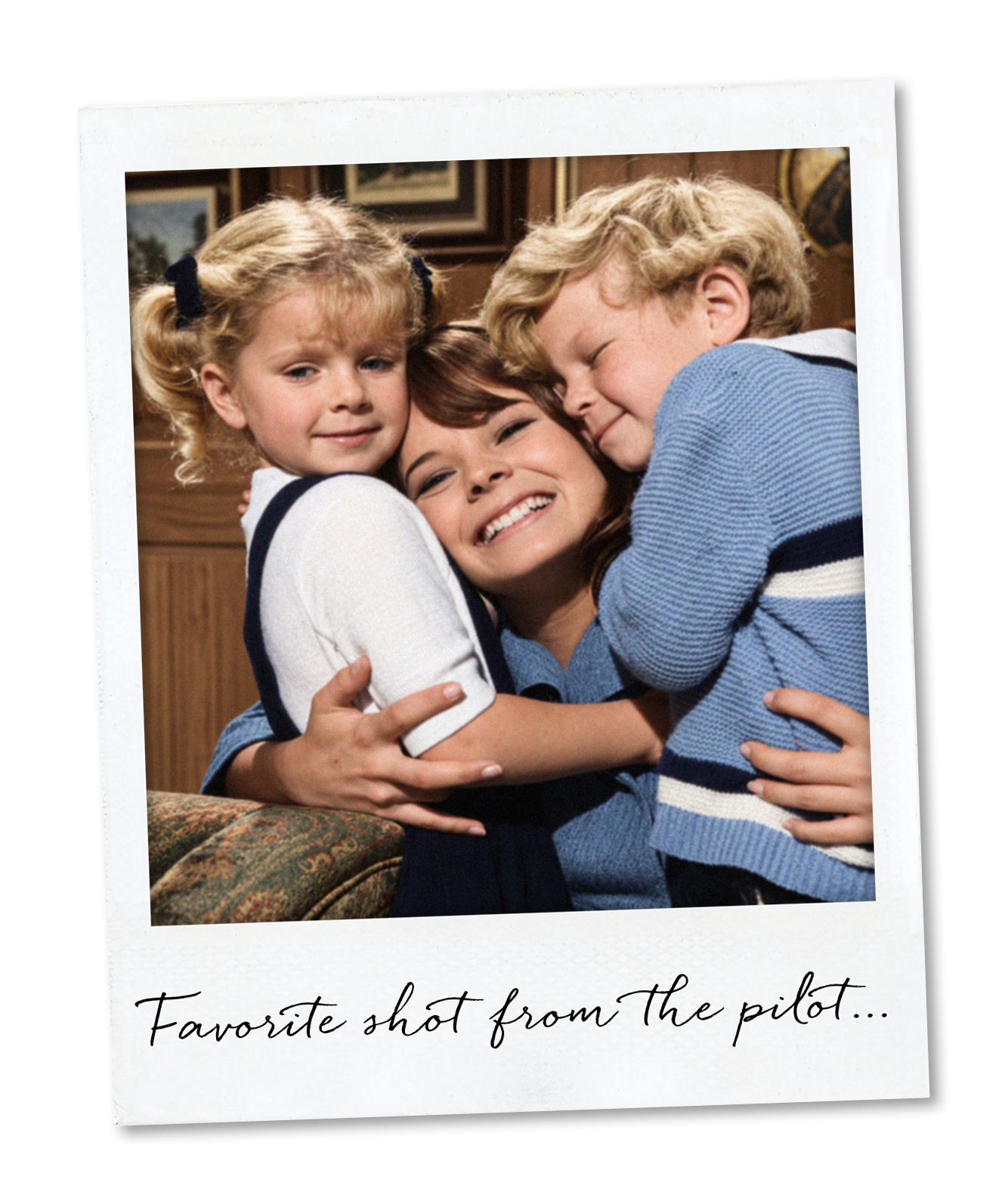
Favorite shot from the pilot.
This is actually a shot from the pilot, and it is one of my favorites. It comes at the end of the episode. Most of the pilot deals with Buffy and her introduction to Uncle Bill and Mr. French. The backstory is that Bill’s brother and his wife had been killed, leaving his nephew and nieces orphaned. The children had been sent to live with different aunts and uncles, who eventually decide that their wealthy brother Bill would be best suited to raise them together.
Jody is finally introduced near the end of the episode, and just as Mr. French is realizing that he is becoming a nanny, Cissy appears at the door. This is the moment when the children are reunited.
“Anissa and Johnny had already been cast. The girl who was supposed to be playing Cissy came back from a European trip where she had gained quite a bit of weight, and she was dropped. At the last minute, I was brought into Mr. Hartmann’s office to read for the part. I was screen-tested, got the part, was sent to hair and make-up, and there I was in the midst of this wonderful show, cast and crew– and now, here, 60 years later.” K.G.
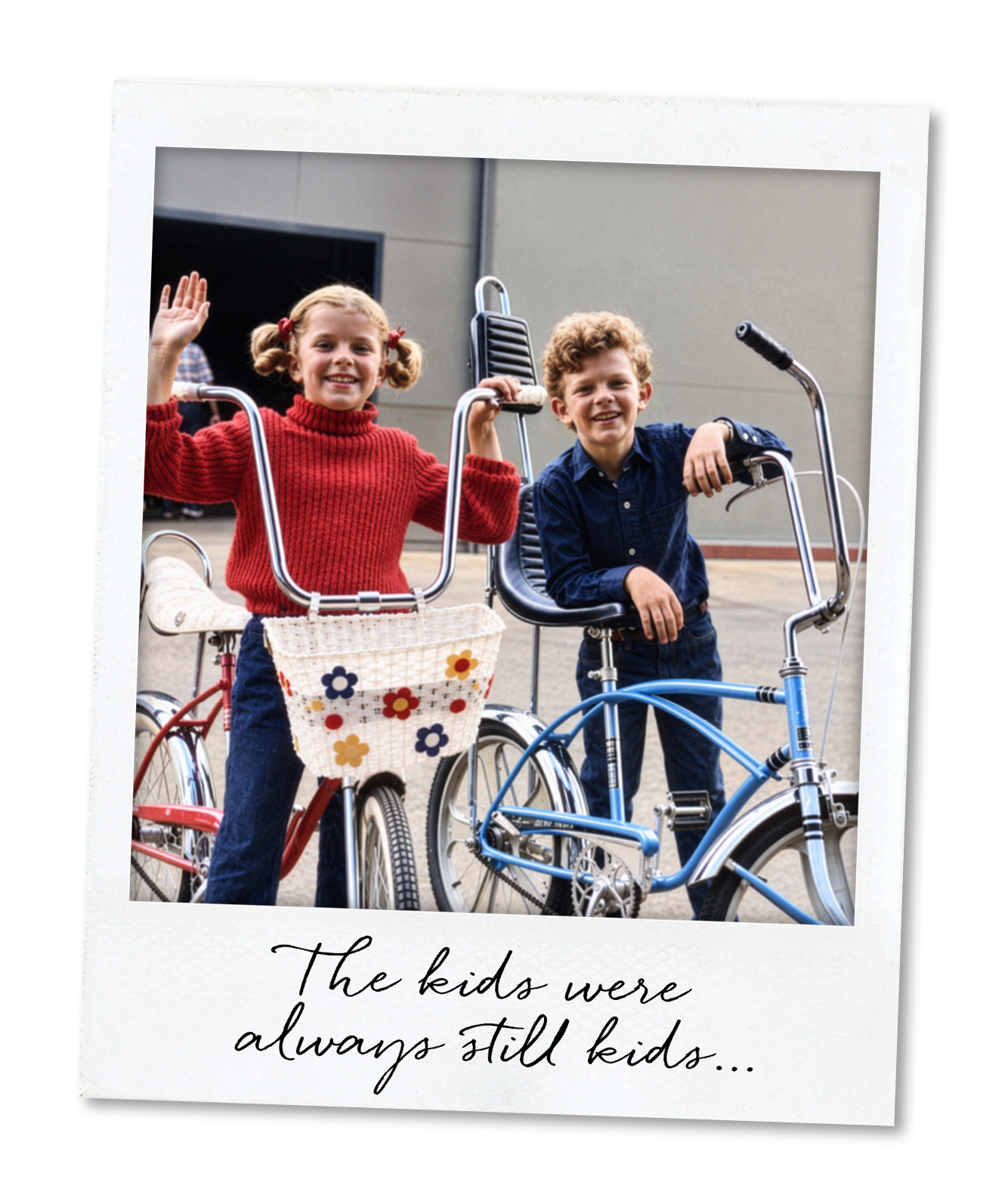
The kids were always still kids.
This is a favorite shot of Anissa and Johnny outside the set on their bikes. They were still kids and enjoyed their playtime. For them, that meant riding their bikes around the lot and exploring the other shows being filmed.
Lucy on her golf cart was a regular sight. It wasn’t unusual to see the kids from our “sister” show, My Three Sons, playing in the alley between the adjacent stages. Star Trek was on a stage farther up the lot, and it was always a treat to see the various characters in make-up wandering over to the commissary at lunch – although some of them might have been a little frightening for an eight-year-old to see.
Later, when we were shooting at CBS Radford, we got to see everything from Wild Wild West to The Doris Day Show to Get Smart. Gilligan’s Island had stopped filming the previous year, but we still had the lagoon set to explore at lunch. It was a magical time in television, and we were surrounded by some wonderful casts and shows.
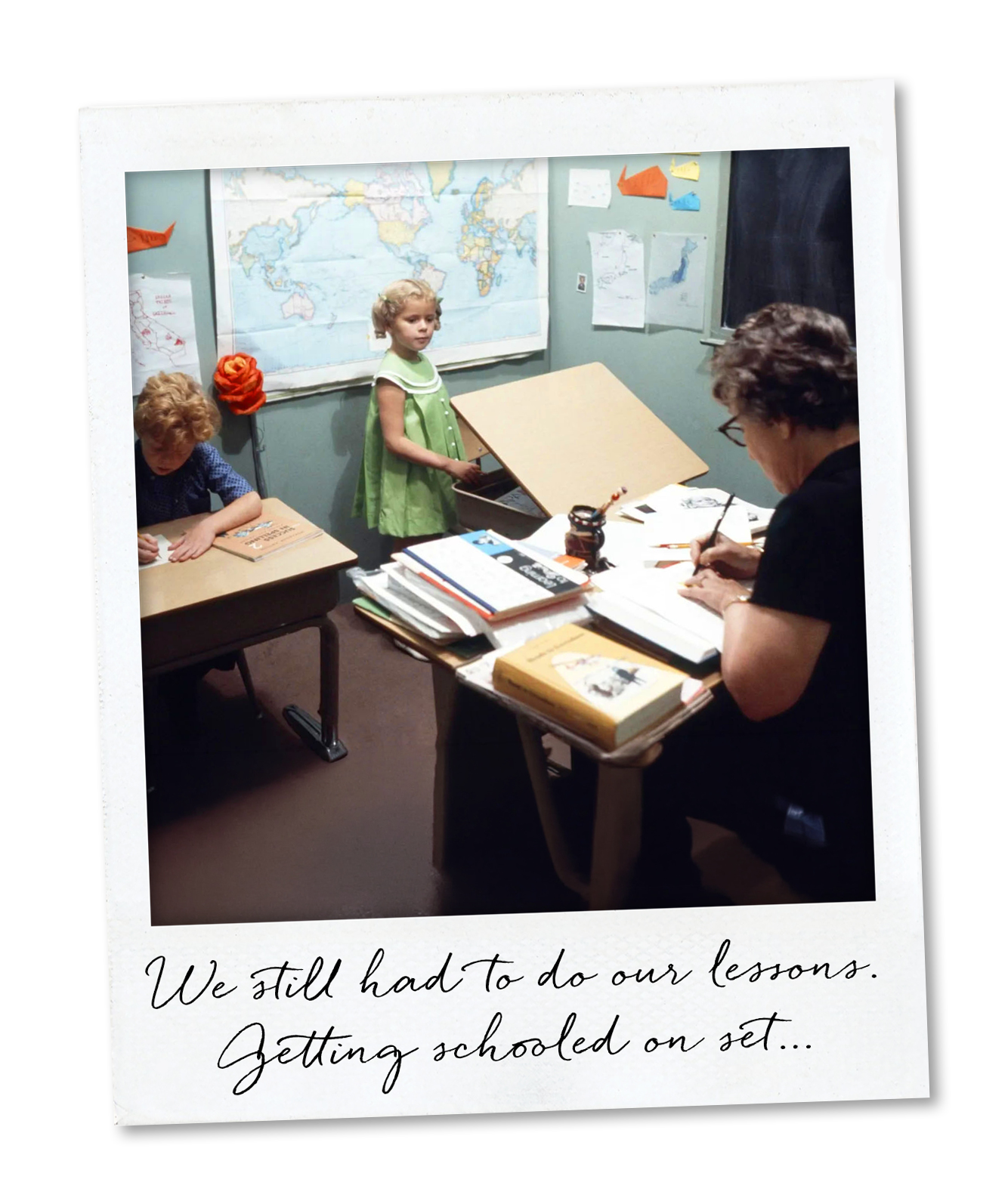
We still had to do our lessons. Getting schooled on set.
This is a behind-the-scenes shot from our on-set schoolroom. Anissa and Johnny were still school-age children, and California law required them to keep up with their schooling. So there was not only a dedicated schoolroom on set, but also a teacher. Child guest stars joined them there during their week of shooting, and between takes they had lessons supervised by on-set guardians.
The lessons were designed to keep them in step with a normal, age-appropriate school curriculum, and many child actors transitioned back to their regular schools between filming assignments.
Additionally, children under 18 could work only a set number of hours per day. That is why you may sometimes notice that the character Cissy was used more.
“Even though I was playing a teenager, in real life I was over 18, so I could work as an adult, with overtime and no restrictions.” K.G.
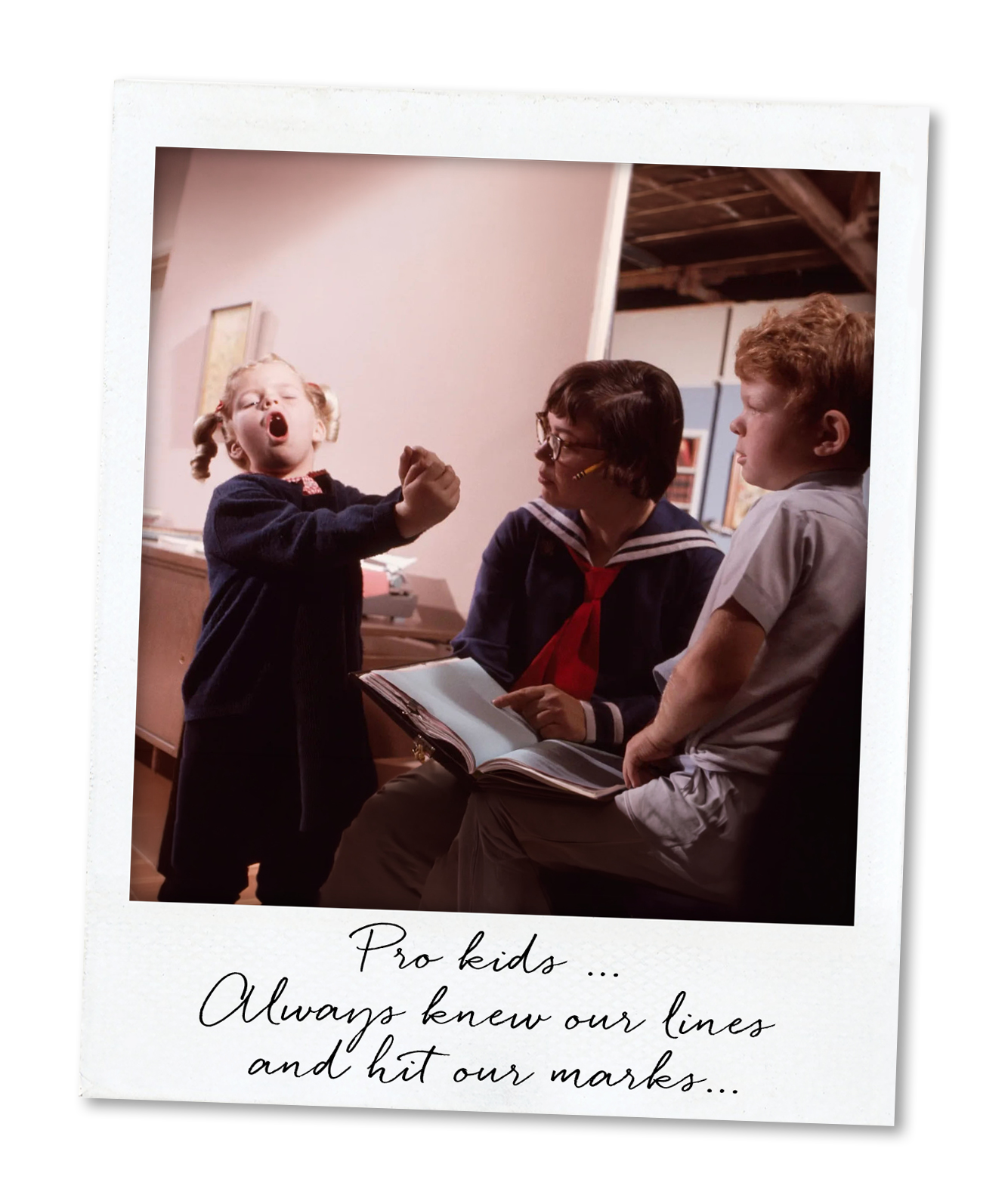
Pro kids. Always knew our lines and hit our marks.
Here’s a favorite behind-the-scenes shot of Anissa and Johnny with the script girl, who is rehearsing their lines with them. Not only did they have to memorize their dialogue, but it was equally important for them to understand how a scene was blocked and, in particular, how to “hit their mark.”
The scenes were carefully choreographed around camera placement, movement and lighting. The kids had to land precisely on a tape mark on the floor so the camera could stay in focus and the lighting would be right. Imagine having that kind of professional discipline at eight years old.
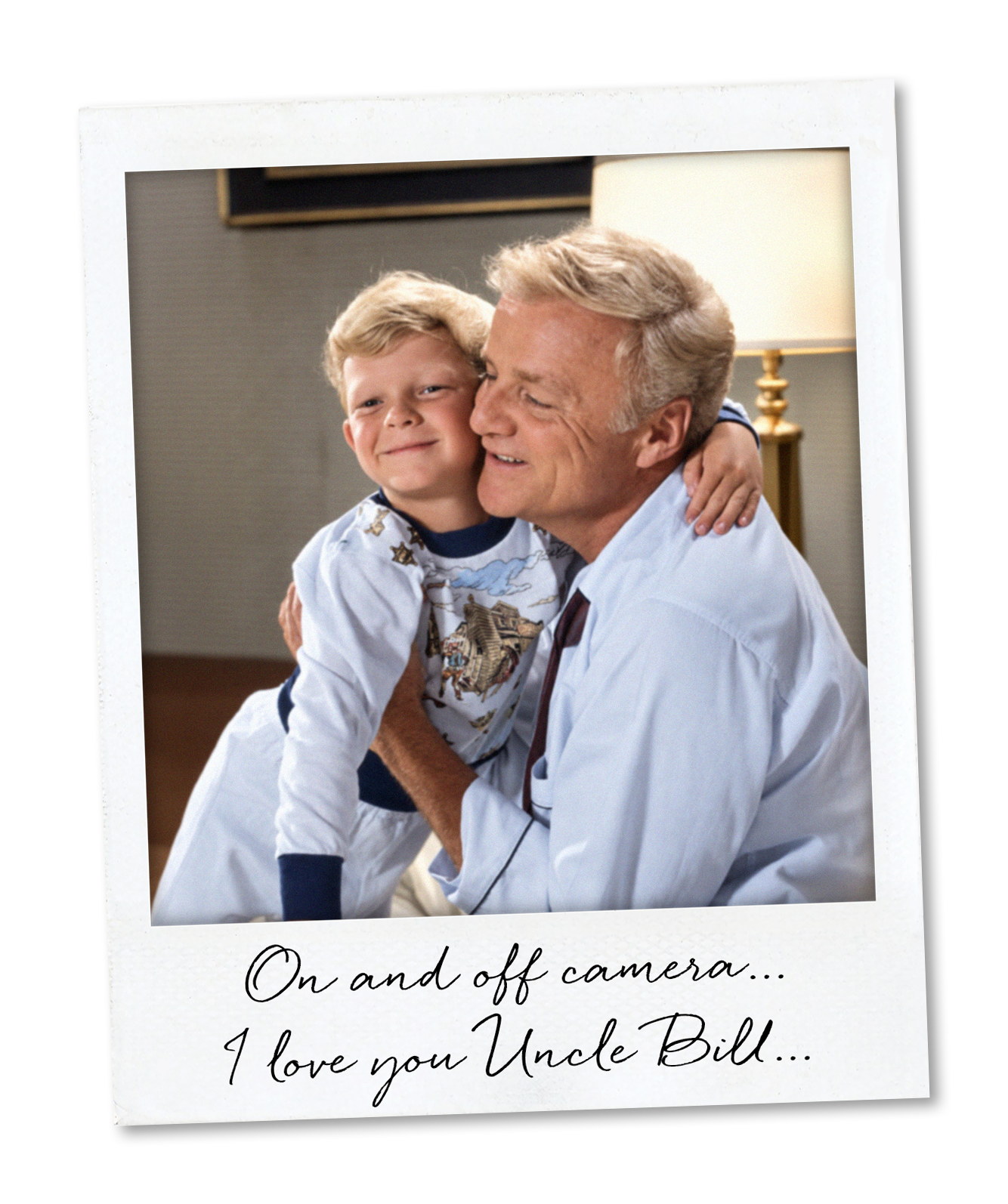
On and off camera. I love you, Uncle Bill.
One of the great things that developed during the show was the special relationship between the kids and Brian, particularly with Johnny. There was a real chemistry and affection between them that the camera captured. I think Brian understood that, especially when working with children, there needed to be a bond off camera that would carry over and make the acting easier for everyone on camera.
Interestingly, Brian was responsible for Johnny Whitaker being on the series. As the producers were casting the children, Brian remembered “this cute red-headed kid” from a picture he had just finished, The Russians Are Coming – Johnny Whitaker. They brought him in for a screen test, and he interacted so well with everyone, particularly Anissa, that the story was rewritten. Instead of being brother and sister with a few years’ age difference, the characters became twins to explain why they appeared to be the same age.
Sebastian and the kids at the Stage Door.
This is a fun shot outside the stage door. The kids were usually watched over by a parent or guardian who had to be on set. It looks as though Sebastian has been put into his “nanny” role even off camera here. In truth, it was wonderful to see the caring bond he developed with the twins.
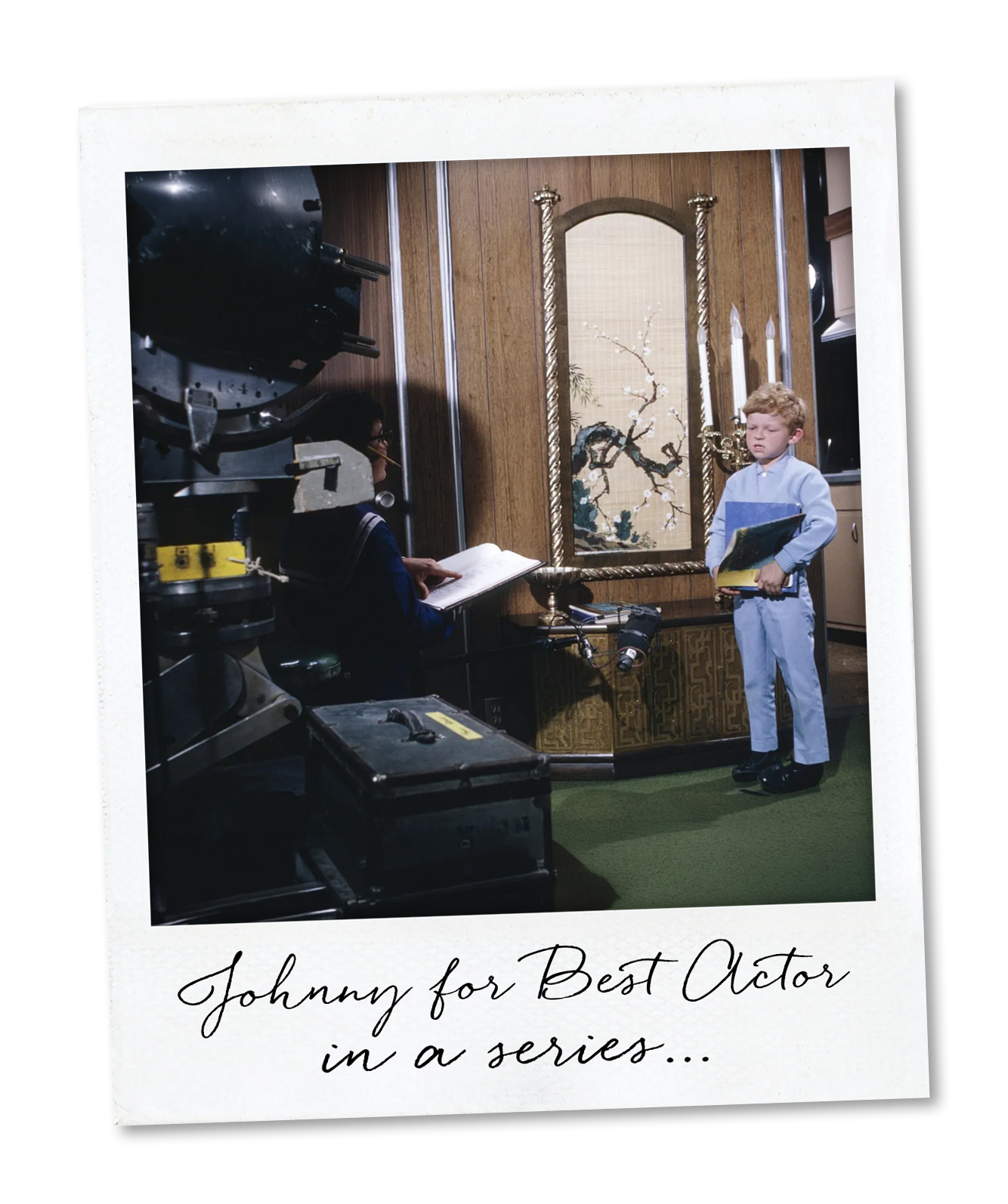
Johnny for Best Actor in a series.
Even at this young age, Johnny – and, for that matter, Anissa – were pros: memorizing dialogue, taking direction and hitting their marks.
Johnny in particular was already a seasoned actor. He went on to have a successful career in both television and feature films. After Family Affair, he starred in Sigmund and the Sea Monsters on television for Sid and Marty Krofft and in a remake of Tom Sawyer for United Artists.
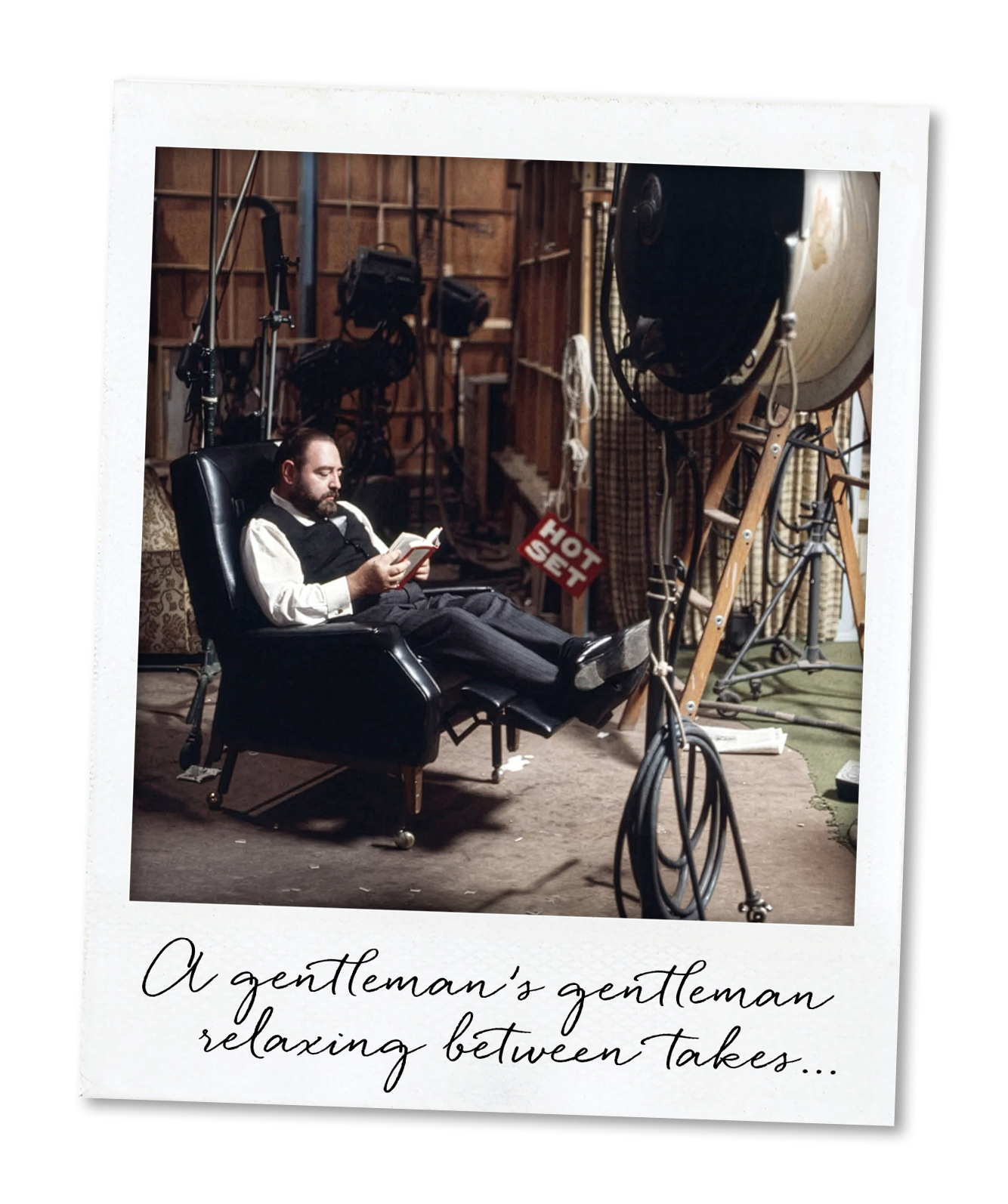
A gentleman’s gentleman relaxing between takes.
This shot looks like Sebastian relaxing between takes. He loved to find a quiet corner, and if he wasn’t studying his lines, he could usually be found reading a good book.
It looks as though one of the grips has taken his favorite wing-back chair from our “Den” set and moved it into that quiet corner of the stage. Even between scenes, he remained in his suit and vest – very proper.
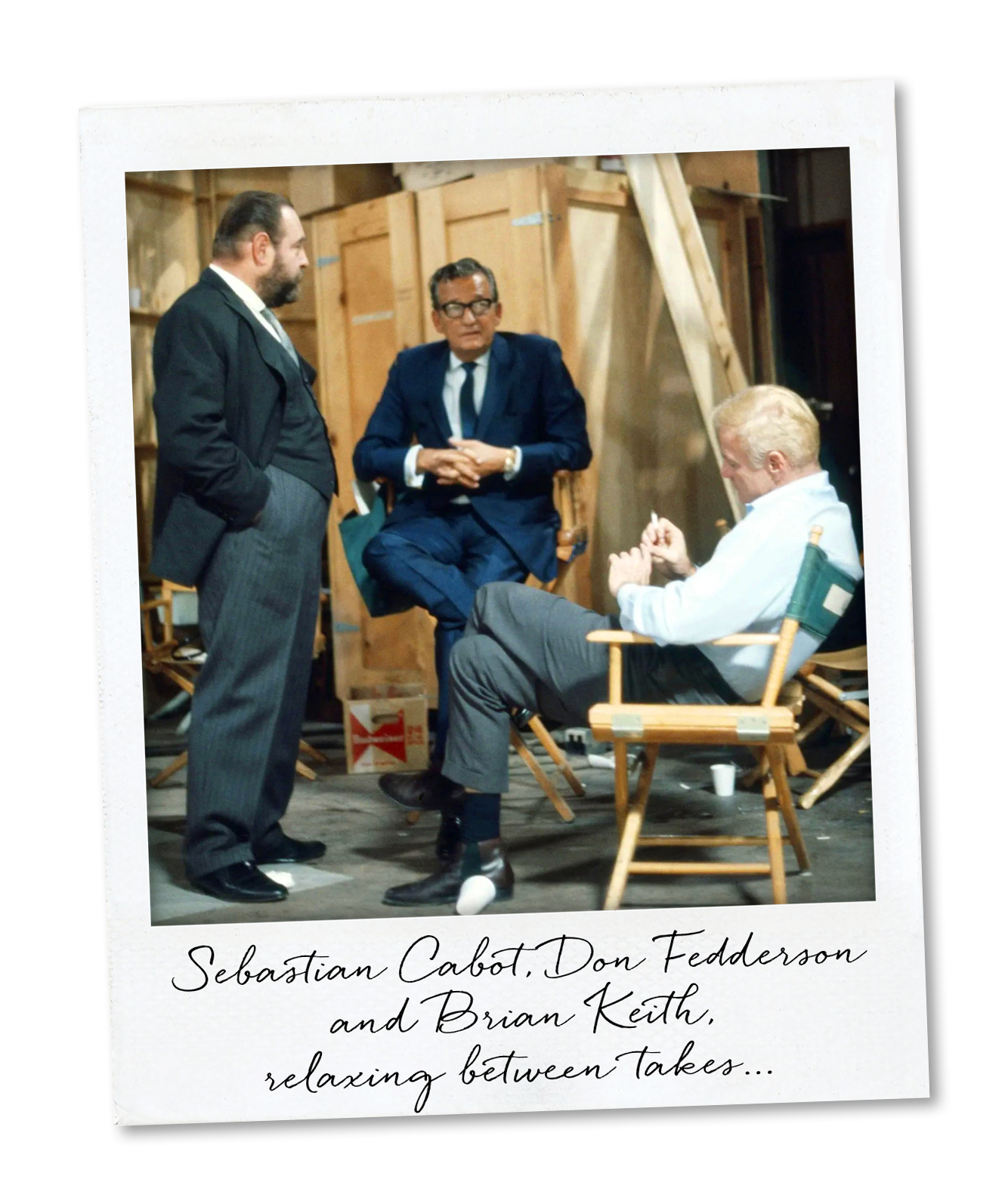
Don Fedderson, Brian Keith and Sebastian Cabot relaxing between takes.
This is a great shot of Brian and Sebastian relaxing with our producer, Don Fedderson. It was unusual to have Fedderson on the set like this because he was one of the busiest guys around. At one point during our series, producers Fedderson and Hartmann had four separate series shooting and on the air – an amazing accomplishment even back then.
And back in the day, there was one producer and one executive producer. Look at the credits today, and it can take four or five producers and four or five executive producers on just a single show to get things done. These two gents did it with just each other and a great production team.
“I’m trying to imagine what they’re talking about. Either Brian is entertaining them with one of his many show-business anecdotes, or Don is inviting them to a 7 a.m. tee time at Bel Air on Saturday with MacMurray.” K.G.
Hardworking actors at the end of a grueling day filming.
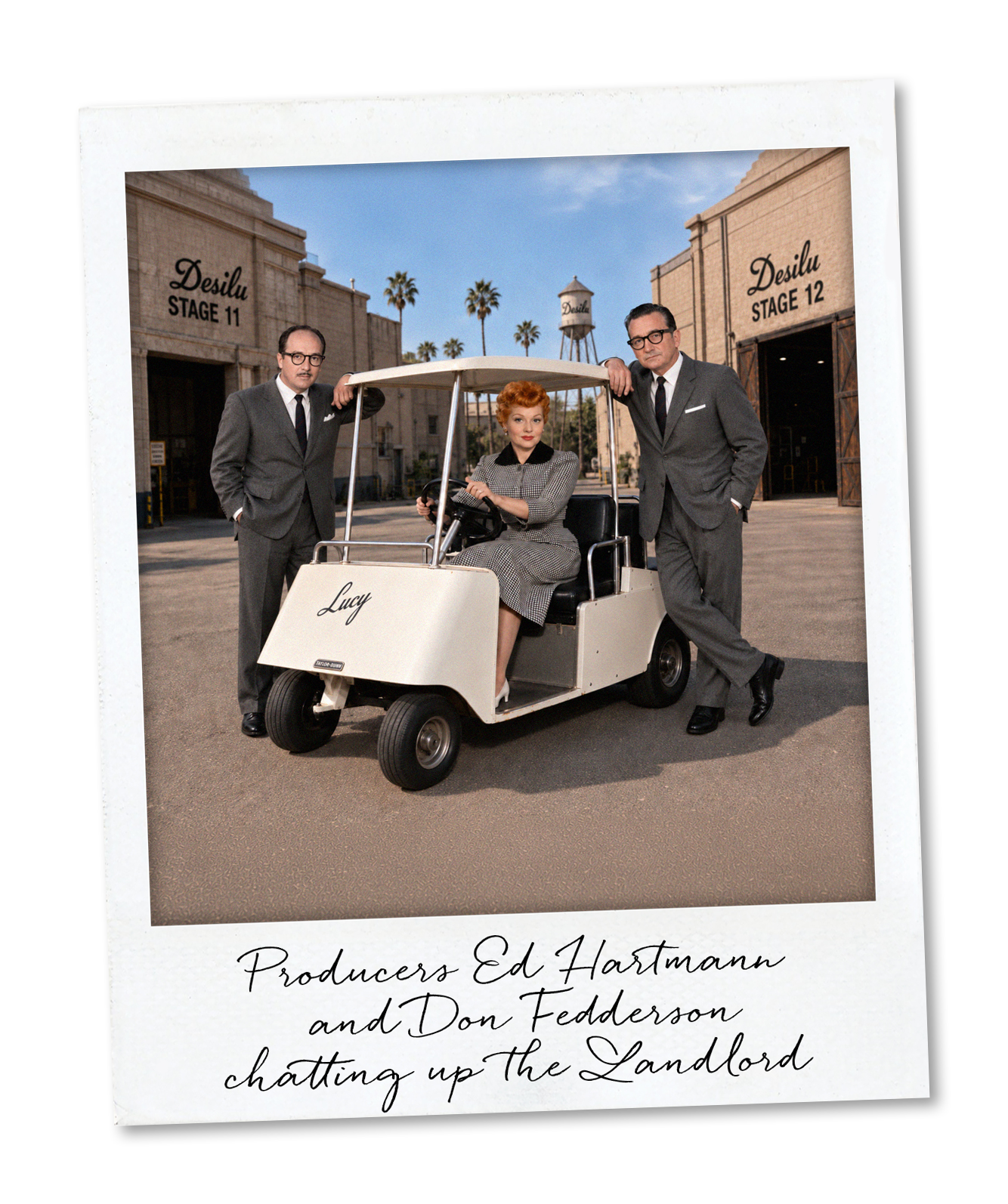
Producers Ed Hartmann and Don Fedderson chatting up the landlord.
The great thing about our first season was that we shot the show at Desilu. At the time, Desilu was a center of television production. We were surrounded by so many other great Desilu-produced shows: Star Trek, Mission Impossible and, of course, The Lucy Show.
In addition, Lucy was also our “landlord.” She rented stages to many of the important independent producers of the day. Along with our show, our “sister” show, My Three Sons, was on the lot, as were shows by Danny Thomas, Sheldon Leonard and Bing Crosby.
Our producers, Ed Hartmann and Don Fedderson, had known Lucy – and Desi – for many years. Fedderson had shot several shows on the lot going back to his successful 1950s series, The Millionaire. Hartmann had known Lucy since their RKO days in the 1930s, when he scripted one of her early pictures, Beauty for the Asking. He later worked with her at Paramount, where he scripted several comedies in which she co-starred with Bob Hope, including Fancy Pants and Sorrowful Jones.
“Lucy sold Desilu to Paramount after our first year there, and the producers moved our show to CBS Radford in Studio City, which became our “home” for the rest of the seasons.” K.G.